

Generative Engine Optimization for eCommerce
Generative Engine Optimization (GEO) for eCommerce is the practice of structuring product content, category pages, and brand assets so AI engines including ChatGPT, Perplexity, Google AI Overviews, and Gemini recommend your products by name when shoppers ask what to buy. Unlike traditional SEO, which targets ranked links, GEO targets cited answers.
Your products deserve to be cited — not just ranked. We make eCommerce brands the source AI engines recommend when shoppers ask ChatGPT, Perplexity, and Google AI Overviews what to buy.

45%
of Google searches now trigger an AI Overview (SparkToro, 2024)
58%
reduction in click-through rates when AI Overviews appear (Authoritas, 2024)
6.5X
more likely to be cited via third-party sources (Princeton GEO Study, KDD 2024)
40%+
visibility boost from optimized content with citations (ibid.)
Traditional SEO vs. GEO Comparison
| DIMENSION | TRADITIONAL SEO | GEO FOR ECOMMERCE |
|---|---|---|
| Core Goal | Optimize for blue links on page 1 | Optimize to be cited in AI-generated answers |
| Key Metrics | Keyword density & backlinks | Content extractability & citation authority |
| Scope | Win one search engine at a time | Win across ChatGPT, Perplexity, Gemini, Copilot + Google |
| Discovery | Product pages rank in SERPs | Get recommended by AI when shoppers ask what to buy |
| Source of Value | Clicks depend on ranking position | Citations come from content quality, not rank alone |
Our GEO Service Offerings
AI Visibility Audit
Analyze brand presence across ChatGPT, Perplexity, Google AI Overviews, Gemini, and Copilot. Map citation gaps and competitor positioning.
Product Content Optimization
Transform product pages, category descriptions, and buying guides into AI-extractable, citation-worthy content.
Brand Authority Engine
Build an interconnected content ecosystem that positions the brand as the authoritative source for its product category.
Third-Party Citation Strategy
Build presence across platforms where AI engines pull recommendations. Brands are 6.5× more likely to be cited through third-party sources.
Ongoing Monitoring & Iteration
Track AI share of voice month-over-month, measure citation rates against competitors, and continuously optimize content.
Technical GEO Implementation
Handle the technical foundation from robots.txt configuration for AI crawlers to structured data deployment.
Why Ecommerce Brands Need GEO

How has AI changed eCommerce product discovery?
Shoppers now use AI assistants for deep product research rather than just scrolling through links. When a consumer asks for a recommendation, AI engines cite specific brands based on data extractability. If your product content isn’t structured for AI, your brand won’t appear in the recommendation regardless of your traditional search rank.
How do AI engines choose which products to recommend for category queries?
AI engines generate “Best X for Y” answers by citing 3–5 trusted sources. GEO positions your product and category pages as the authoritative sources AI engines trust. By optimizing for citation-worthy content and structured schema, we help get your brand to be one of the few cited sources recommended to high-intent shoppers.

Why is early adoption of a GEO strategy critical for eCommerce brands?
Early adopters are currently capturing the majority of AI share of voice while competition is low. Because AI models learn from existing citations, securing your place in the “knowledge graph” now prevents market share loss. Every month without a GEO strategy is market share conceded to competitors who are already being cited.
Ready to become the brand AI recommends?
After our GEO Audit, our client increased their citation rate in Google AI Overviews by 22% within 90 days.
Generative Engine Optimization (GEO) FAQs
WHAT IS THE DIFFERENCE BETWEEN SEO AND GEO FOR ECOMMERCE?
Traditional SEO focuses on keyword density and backlinks to rank your website among blue links on page one of search results. In contrast, GEO optimizes your content for “extractability” and “citation authority,” ensuring AI assistants recommend your specific products by name when answering complex shopper queries.
HOW DO AI ENGINES DECIDE WHICH PRODUCTS TO RECOMMEND?
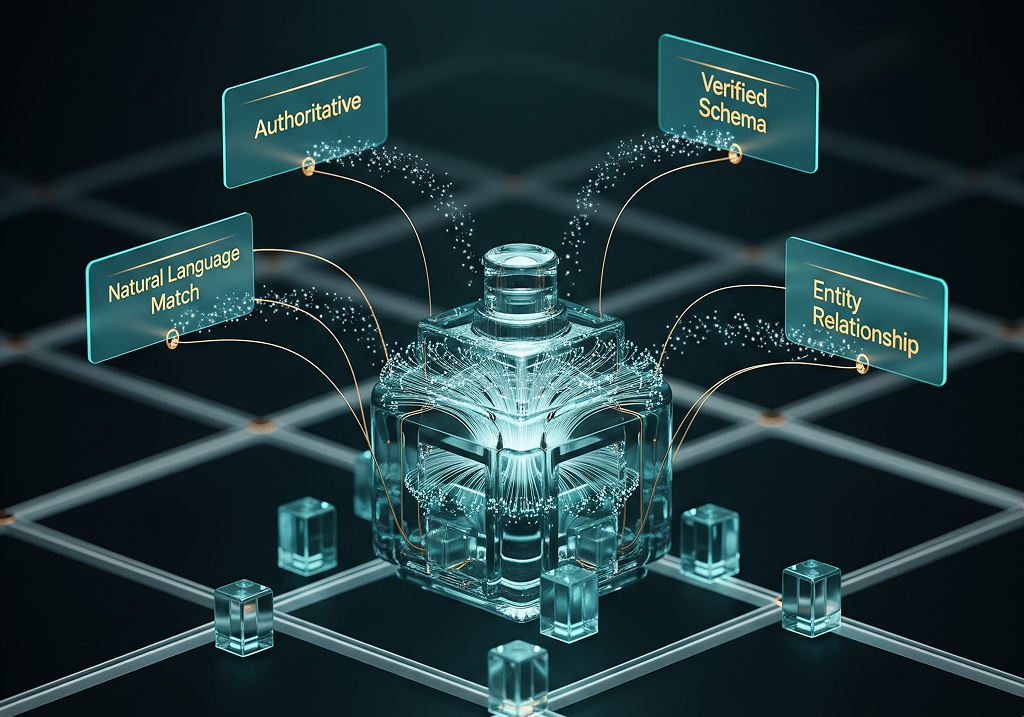
AI engines prioritize products based on three main factors: high-quality structured data (schema), content that directly answers “natural language” questions, and authority signals from trusted third-party sources like Reddit or professional review sites. They choose the sources that are most easily parsed and verified as authoritative.
HOW LONG DOES IT TAKE TO SEE RESULTS FROM A GEO STRATEGY?
While timeline varies by category, brands typically see shifts in AI citation rates within 60 to 90 days. Initial technical optimizations and schema deployments can trigger “freshness signals,” but building a comprehensive knowledge graph that dominates competitive “Best X for Y” queries is an ongoing iterative process.
WHICH AI PLATFORMS DOES YOUR GEO SERVICE OPTIMIZE FOR?
Our service is platform-agnostic, designed to win visibility across the entire generative landscape. This includes large language models like ChatGPT (OpenAI) and Gemini (Google), dedicated AI search engines like Perplexity, and integrated experiences such as Microsoft Copilot and Google AI Overviews.
CAN GEO WORK ALONGSIDE OUR EXISTING SEO PROGRAM?
Yes, GEO and traditional SEO are highly complementary. While SEO continues to drive traffic from standard search queries, GEO captures the growing segment of users who rely on AI assistants for product discovery. High-quality content optimized for AI extraction often improves traditional search rankings as a byproduct.
WHAT ECOMMERCE PLATFORMS DOES SILK COMMERCE'S GEO SERVICE SUPPORT?
Leveraging our decade-long track record as a leading agency, we provide comprehensive GEO support for all major eCommerce ecosystems, including Adobe Commerce (Magento), BigCommerce, and Shopify.
Let’s Talk GEO
Ready to take your GEO strategy to the next level? Let’s get started.